DESKSPACE MEASURING GUIDE
Desk width and depth: why both matter
Surface area alone cannot tell you whether a desk will fit.
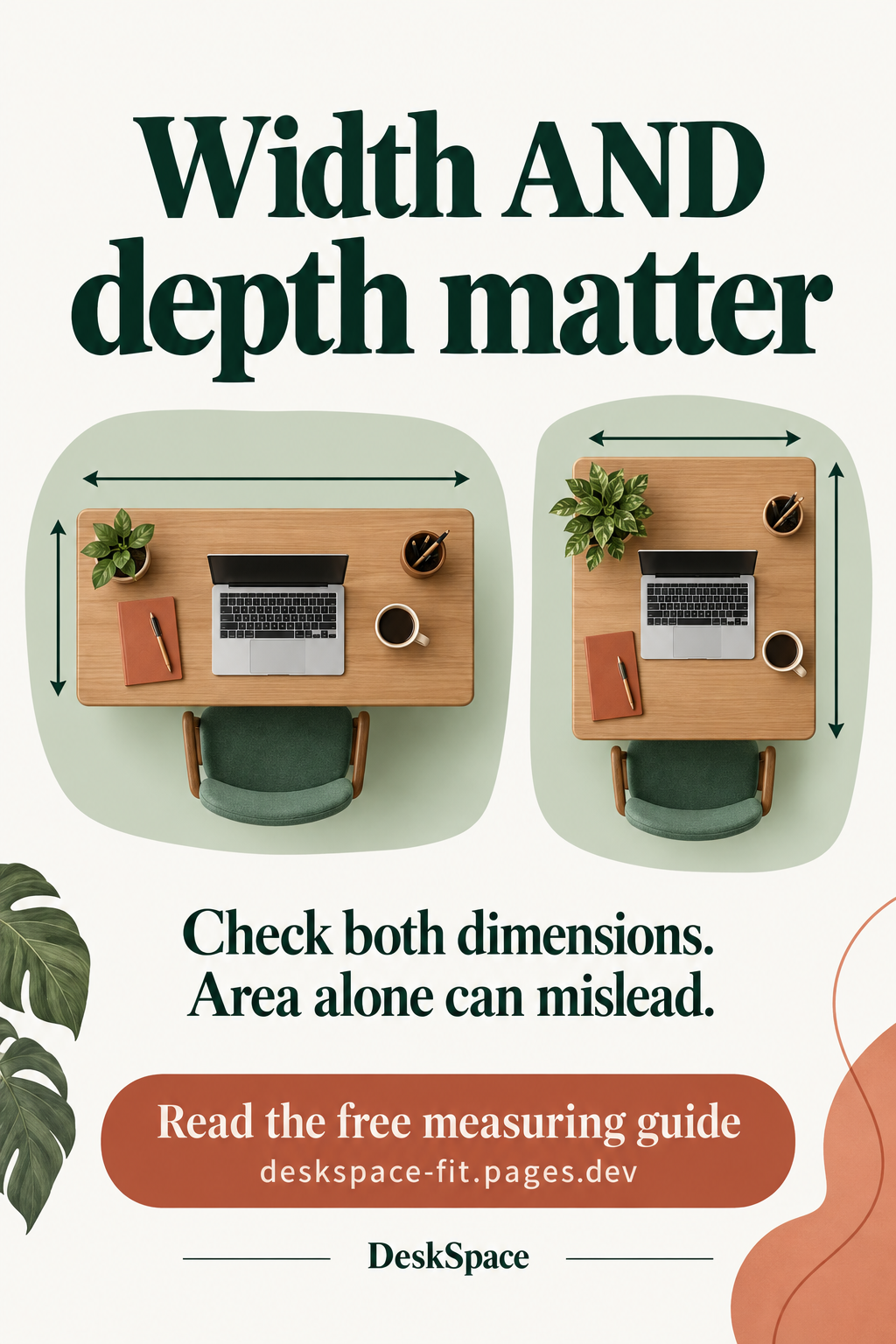
Treat width and depth as separate limits
Desk width runs from left to right; depth runs from the front edge toward the wall. Retailers may list dimensions in different orders, so look for a labelled diagram. Compare width with your available width and depth with your available depth. Do not swap the numbers unless your room layout and the actual desk allow that rotation.
Equal area does not mean equal fit
A 48 by 24 inch top has 1,152 square inches of area. A 64 by 18 inch top has the same area. In a space limited to 52 inches of width, the second desk fails even though the areas match. This is why DeskSpace filters both dimensions instead of matching a single area value.
Plan your equipment footprint
Measure the equipment you intend to place on top. A monitor stand, keyboard, notebook and speaker bases need their own arrangement. Mark their outlines on a table or a piece of cardboard. A deeper desktop may help one arrangement but take away chair space in a shallow room. Your equipment and room jointly determine the useful shape.
Check the whole desk
Desktop measurements do not describe leg placement, drawer positions or cable trays. A top can fit while a support blocks your chair. Read the assembly diagram and compare the under-desk dimensions with your chair and anything stored below. For unusual tops or L-shaped desks, measure each section rather than treating the whole shape as one simple rectangle.
These examples explain geometry and planning. They are not product tests or accessibility specifications.
Try your measurements →